Essential Contact Lens Practice
Learn moe about contact lens management
Access essential tips and best practices for managing contact lens care, improving patient satisfaction, and ensuring optimal vision health outcomes.
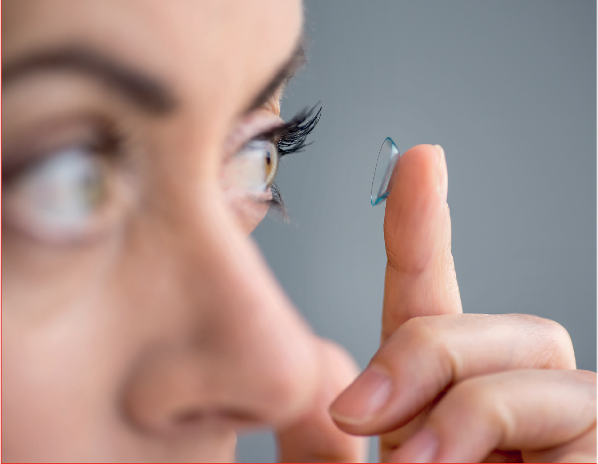

Chapter 2: Initial Patient Discussion
Success with contact lenses begins with finding the best match for each individual patient and ensuring that we review that match regularly as patients’ lifestyles and ocular health needs change.
Chapter 3: Initial Examination: Refraction and Corneal Assessment
The process of contact lens fitting requires comprehensive clinical assessment of the patient, including evaluation of refractive requirements along with a series of additional anterior eye measurements, together with assessment of corneal contour. This information, in conjunction with consideration of the patient needs and an anterior eye health assessment, will contribute to determining the ideal lens choice for each individual patient.
Chapter 4: Initial Examination: Slit Lamp Examination
Careful slit lamp examination of the anterior eye is an essential part of contact lens practice. Guidelines from professional bodies, such as the College of Optometrists specify that contact lens practitioners must have a slit lamp microscope

Chapter 5: Assessment of the Tear Film
The importance of the tear film in maintaining comfortable contact lens wear means that the practitioner must be able to carefully and accurately assess the tears, both before and during contact lens wear.

Chapter 6: Contact Lens Selection
With continuing advances in technology, eye care professionals now have a larger range of contact lens products to choose from than ever before. So, how can we be sure we are prescribing our patients with the right product to meet their needs?

Chapter 7: Soft Contact Lens Fitting
Contact lenses should interfere minimally with corneal metabolism and provide crisp, clear, stable vision while being comfortable at all times. Prescribing the right material, lens dimensions and wearing modality to match the wearer’s ocular surface and lifestyle, should be the goal of every eye care professional.

Chapter 8: RGP Contact Lens Fitting
Whilst the initial lens awareness and period of adaptation that comes with RGP lenses can be unappealing to patients, the stable lens surface of the RGP can provide superior visual quality compared to soft lenses.

Chapter 9: Managing the Presbyope
Advances in optical designs, daily disposability and enhanced materials have improved the visual and physiological outcomes making contact lenses an integral choice of vision correction for presbyopic patients and customers.

Chapter 10: The Contact Lens Teach
For all new contact lens wearers, the teach is an exciting part of their journey; the final step before independent lens wear at home.

Chapter 11: Contact Lens Aftercare
The aftercare examination is a fundamental aspect of contact lens practice and is especially important for the preservation of good ocular health, vision and comfort during lens wear.
Chapter 12:The Future of Contact Lenses
Few areas of optometry evolve with the same rapidity as the world of contact lenses. Explore more about the recent and expected future changes to lens categories, the supportive evidence, and future challenges.