TECNIS™ プラットフォーム


TECNIS™ Platform
Material
グリスニングが発生しにくい疎水性アクリル素材を採用1
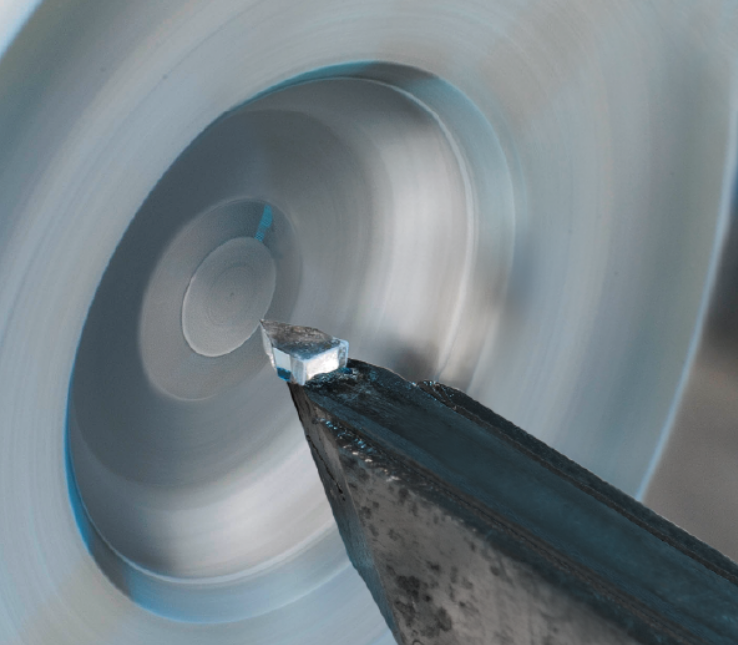
■独自技術であるダイヤモンドクライオレースカット製法を採用しています。
■正確な温度管理によるアクリル素材の高い精度と再現性に加え、成形工程におけるなめらかな光学部とシャープなエッジデザインを実現します。
サーカディアンリズム同調に必要な青色光を透過させ、UVと紫色光をカットする非球面着色眼内レンズ2
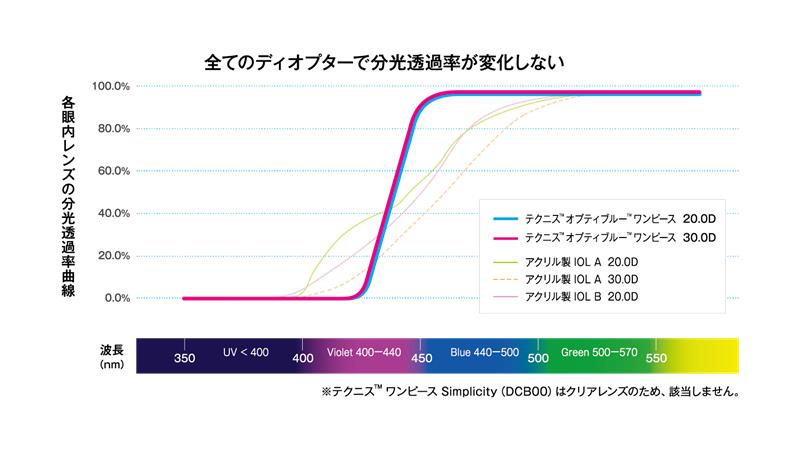
■サーカディアンリズム同調に必要なメラトニン分泌抑制作用の55%は青色光に依存します。
■青色光は全身の健康、気分や睡眠に関係するメラノプシン感度を増加させます。
■暗所視感度の35%は青色光に依存します。
■TECNIS™オプティブルー™は暗所視感度を改善させます。
Optics
球面収差をはぼゼロに低減し、より鮮明な視機能を提供3

■コントラスト感度と視機能は19~25歳でピークに達します3-7。
この時期、眼全体の球面収差はほぼゼロとなります。
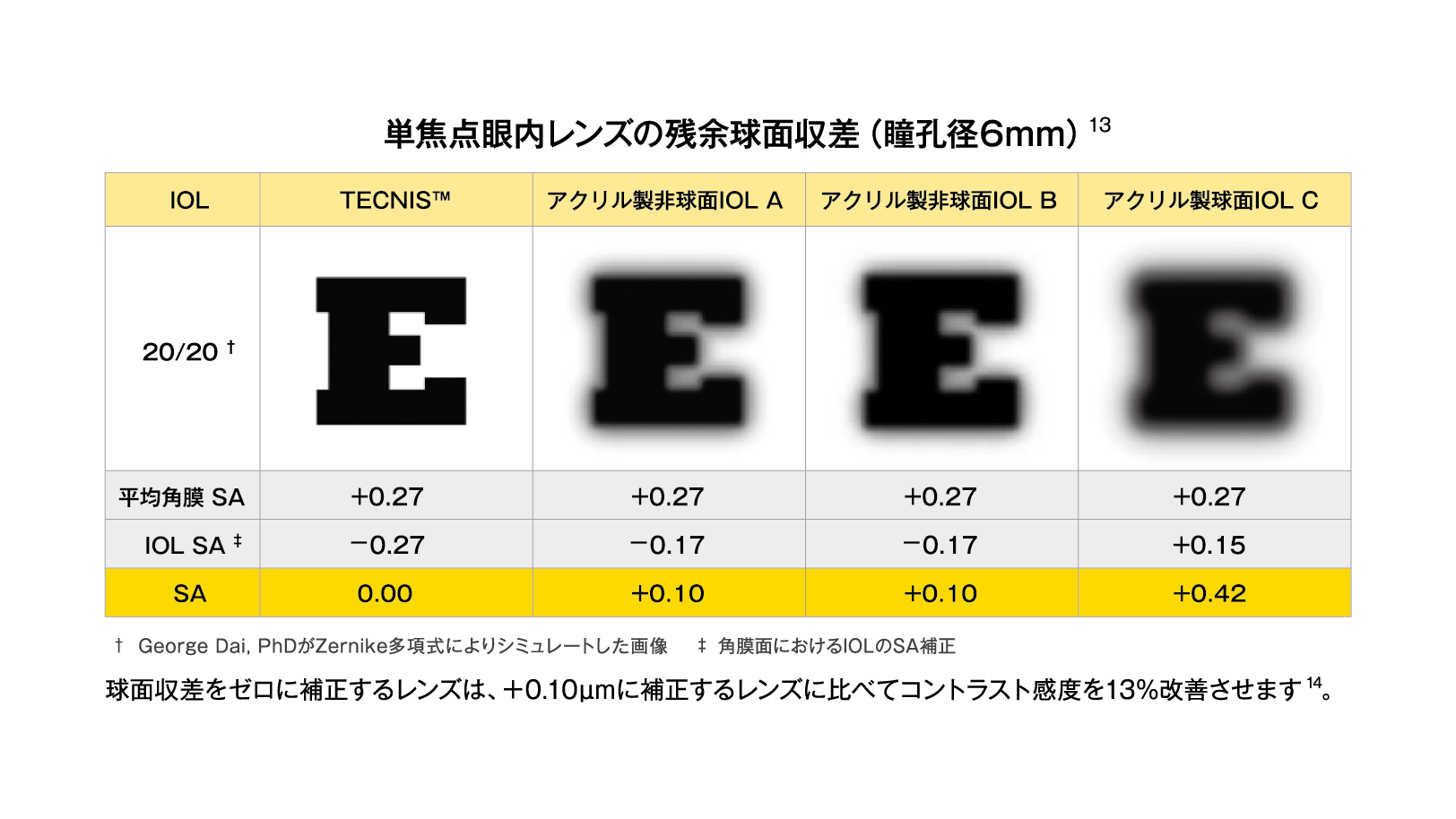
■角膜の球面収差が生涯を通じ平均+0.27μmであるのに対し、水晶体の球面収差は年齢とともに増大します8-13。
■TECNIS™は、眼全体の球面収差をほぼゼロに低減し患者様に良好な視機能を提供します。
Design
360°シャープエッジと3点固定で、長期にわたるPCO抑制と嚢内安定を実現15
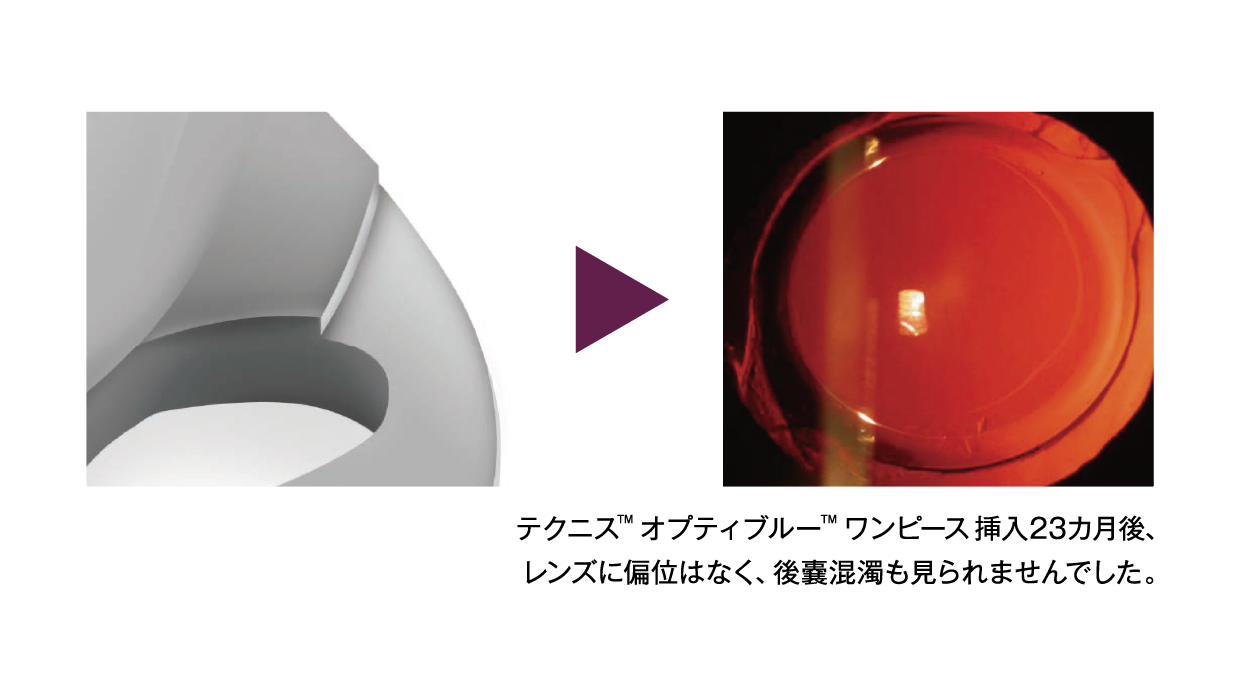
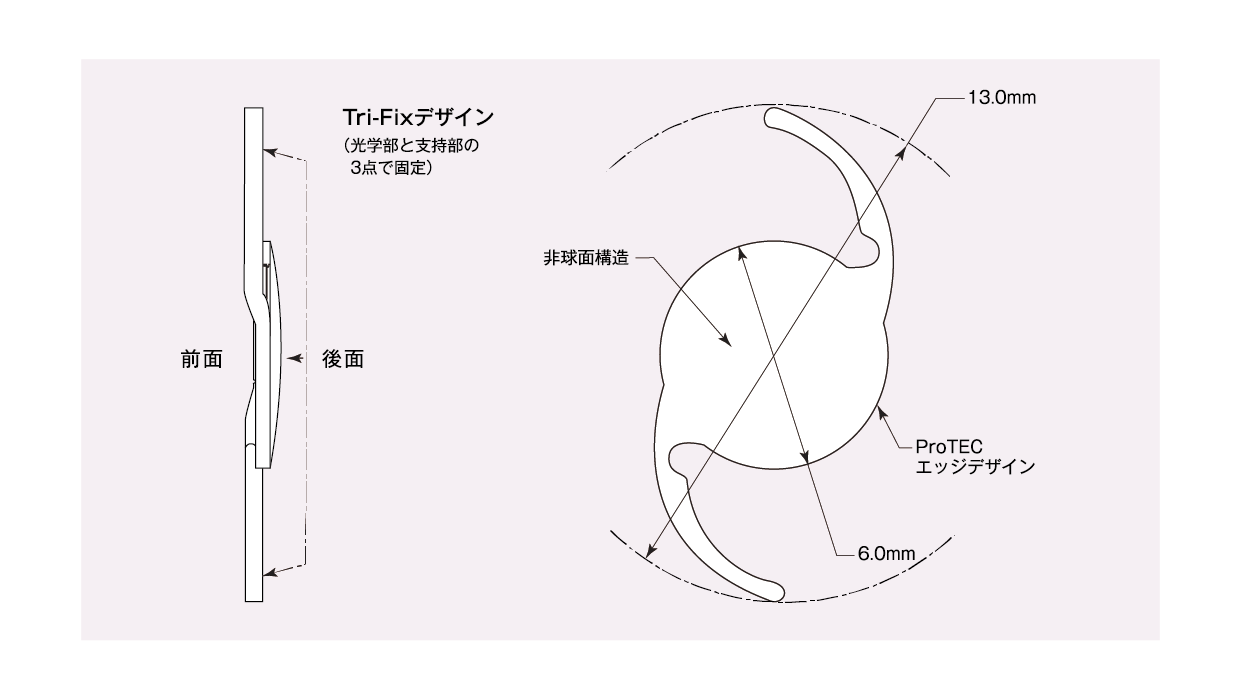
■360°切れ目のないProTECエッジデザインによって水晶体嚢との密着を高め、LECの遊走とPCOの発現を抑制します。

■Tri-Fixデザインにより、光学部と支持部の3点で水晶体嚢への固定を可能にします。
予測屈折値がずれにくく、長期にわたる安定性、中心固定を高めるデザインです。
References:
1. Miyata A, Yaguchi S. Equilibrium water content and glistenings in acrylic intraocular lenses. J Cataract Refract Surg. 2004;30(8):1768-72.
2. Mainster MA. Violet and bluelight blocking intraocular lenses: photoprotection versus photoreception. Br J Ophthalmol. 2006;90:784-792.
3. Artal P, Alc ón E, Villegas E. Spherical aberration in young subjects with high visual acuity. Paper 558. Presented at: 24th Congress of the ESCRS; 2006 Sep 9-13; London, England.
4. Smith G, Cox MJ, Calver R, Garner LF. The spherical aberration of the crystalline lens of the human eye. Vision Res. 2001;41:235-243.
5. Glasser A, Campbell MC. Presbyopia and the optical changes in the human crystalline lens with age. Vision Res. 1998;38:209-29.
6. Guirao A, Gonzalez C, Redondo M, et al. Average optical performance of the human eye as a function of age in a normal population. Invest Ophthalmol Vis Sci. 1999;40(1):203-13.
7. Wang L, Koch D. Ocular higher-order aberrations in individuals screened for refractive surgery. J Cataract Refract Surg. 2003;29(10);1896-1903.
8. Mester U, Dillinger P, Anterist N. Impact of a modified optic design on visual function: clinical comparative study. J Cataract Refract Surg. 2003;29:652-660.
9. Bellucci R, Morselli S, Piers P. Comparison of wavefront aberrations and optical quality of eyes implanted with five different intraocular lenses. J Cataract Refract Surg. 2004;20:297-306.
10. Kennis H, Huygens M, Callebaut F. Comparing the contrast sensitivity of a modified prolate anterior surface IOL and of two spherical IOLs. Bull Soc Belge Ophtalmol. 2004;294:49-58.
11. Packer M, Fine IH, Hoffman RS, Piers PA. Prospective randomized trial of an anterior surface modified prolate intraocular lens. J Cataract Refract Surg. 2002;18(6):692-696.
12. Kershner RM. Retinal image contrast and functional visual performance with aspheric, silicone, and acrylic intraocular lenses. Prospective evaluation. J Cataract Refract Surg. 2003;29(9):1684-1694.
13. Data on file 115. Johnson & Johnson Surgical Vision, Inc.
14. Zhao H, Piers PA, Mainster MA. The additive effects of different optical design elements contributing to contrast loss in pseudophakic eyes implanted with different aspheric IOLs. Presented at: 27th Congress of the ESCRS;2009 Sep 4-8; Barcelona, Spain.
15. Nixon DR. New technologies for premium outcomes: next generation phaco and TECNIS 1-Piece IOL. Presented at 25th Congress of ESCRS; 2007 Sep 8-12; Stockholm, Sweden.
2026PP08316